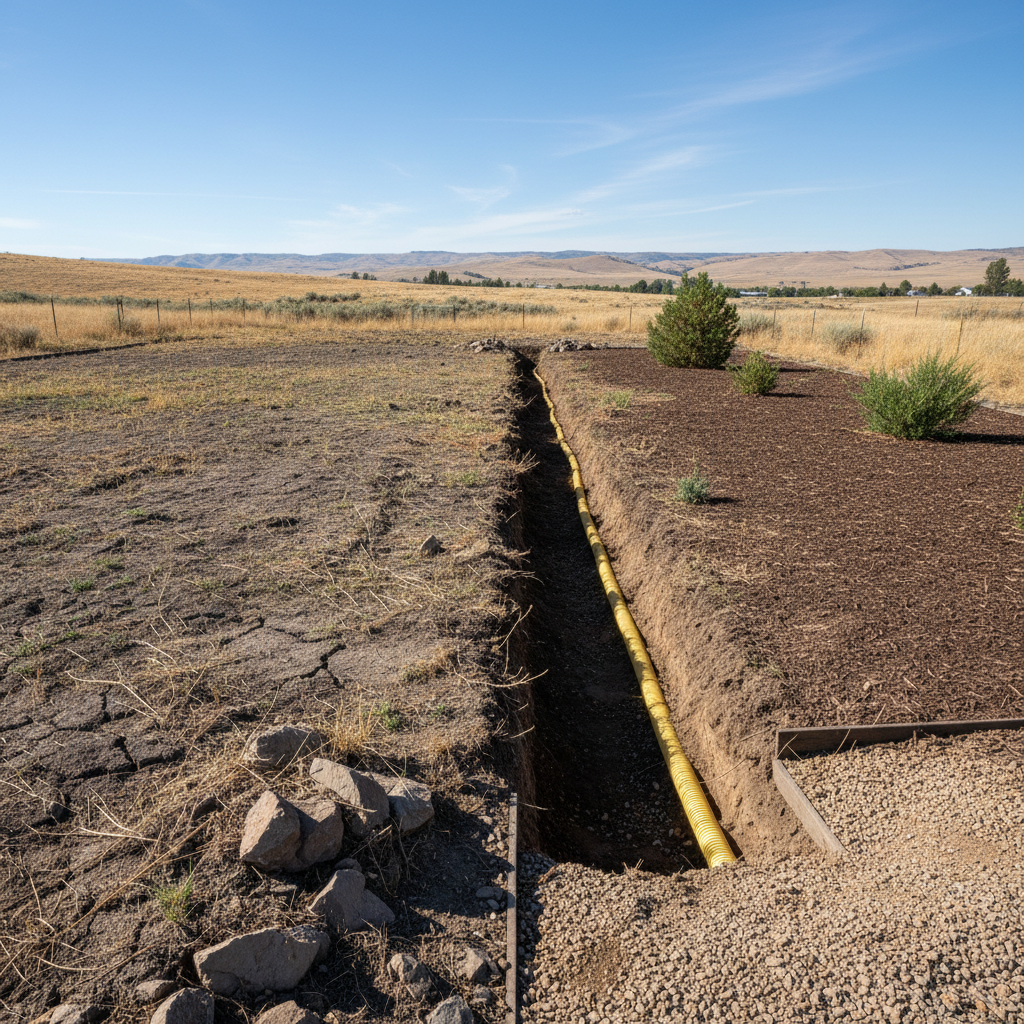
So, you need to run some new lines underground, huh? Maybe it's a water line to that new shop, an electrical conduit out to the shed, or even a new irrigation system for your landscaping. When it comes to getting those pipes or wires buried, you've essentially got two main options: the old-fashioned open cut trenching, or the more modern horizontal directional drilling (HDD). Both get the job done, sure, but they're pretty different in how they go about it, and what that means for your property and your wallet.
Open Cut Trenching: The Classic Dig
This is probably what you picture when you think of trenching. We bring in an excavator or a trencher, dig a ditch, lay the pipe or conduit in, and then backfill it. Simple, right? And usually, it is.
Cost & Speed
For straightforward jobs, especially in open areas, open cut is almost always going to be your cheaper option. It's faster to set up, and the equipment is generally less specialized. If you've got a clear path across your yard, or you're running a long line through a field, this is often the most economical way to go. We can knock out a good stretch of trench pretty quickly.
Durability & Maintenance
When done right, an open cut trench is incredibly durable. You're putting the pipe directly into the earth, and we can inspect the bedding and backfill as we go. Maintenance? Well, if something goes wrong down the line, you know exactly where the pipe is. Digging it up again is usually pretty straightforward, assuming you marked its location, of course.
Appearance & Impact
Here's where open cut can be a bit of a pain. You're literally digging a ditch. That means tearing up your lawn, flower beds, driveways, or anything else in the trench's path. While we always do our best to restore the area, it's never going to look exactly the same immediately. You'll have disturbed soil, and it'll take time for grass to grow back or for the ground to settle completely. If you've got a beautifully manicured lawn or a concrete driveway you don't want to touch, this is a big consideration.
Horizontal Directional Drilling (HDD): The Surgical Approach
Now, HDD is a whole different beast. Think of it like underground surgery. We use a specialized drill rig that launches a pilot bore from one point, steers it underground around obstacles, and brings it up at a precise exit point. Then, we attach the pipe to the drill string and pull it back through the tunnel we just created.
Cost & Speed
Generally, HDD costs more upfront than open cut. The equipment is more complex, and it needs highly skilled operators. The process itself can sometimes be slower for shorter, simpler runs. However, if you're trying to cross something difficult – say, under a paved road, a mature landscape, or even a small creek – HDD can actually save you money. It helps you avoid costly restoration work or permits for disrupting infrastructure.
Durability & Maintenance
The installed pipe's durability is just as good, if not better, with HDD. That's because we often pull the pipe through a pre-reamed hole, which can give it a more consistent bedding. Maintenance, though, can be trickier. If you have a problem, finding the exact spot in an HDD bore can be more challenging since there's no visible trench line to follow. It's not impossible, but it usually requires more specialized locating equipment.
Appearance & Impact
This is where HDD really shines. The impact on your property is minimal. You'll see an entry pit and an exit pit, usually small holes, and that's about it. No long, ugly trenches tearing through your prize-winning petunias or cracking your new concrete patio. If preserving your existing landscape or avoiding disruption to roads and sidewalks is a top priority, HDD is the clear winner.
Which One For Your Moses Lake Project?
Here in Moses Lake, we've got a lot of varied ground conditions. Sometimes you hit that soft, sandy soil that's a dream to dig, and other times you're fighting through hardpan or caliche that makes you wish you'd brought a jackhammer. That's where knowing your options really pays off.
For most residential projects, if you've got a clear path and you're not worried about tearing up some lawn for a bit, open cut trenching is usually the most practical and cost-effective choice. It's what we do most often for things like new septic lines or basic utility runs across a yard. It's straightforward, and you can see exactly what's going on.
But let's say you're trying to run an irrigation line from your well across your paved driveway to your garden on the other side, or maybe you need to get power to a dock without disturbing the shoreline of the lake. That's where horizontal directional drilling becomes invaluable. It's worth the extra cost to avoid ripping up that concrete or messing with the sensitive lakefront environment. We've done plenty of jobs where trying to open cut would have been a nightmare of permits, repairs, and unhappy homeowners.
Ultimately, it comes down to your specific project, your budget, and what you're willing to live with in terms of disruption. We always talk through both options with our clients at Classic Excavating Solutions. That's how we make sure you're getting the best approach for your property and your wallet. Don't just assume one way is always better; let's look at your situation and figure out the smartest way to get those lines in the ground.