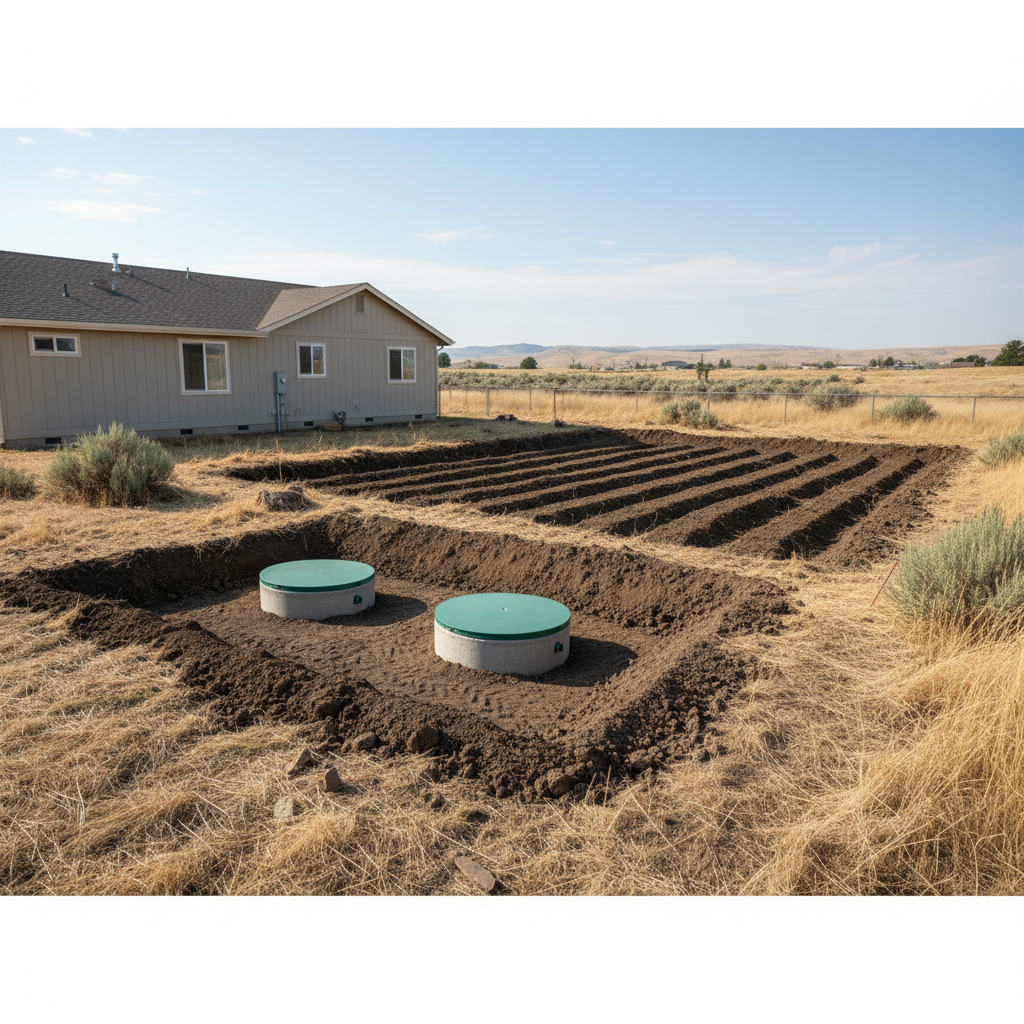
Alright, let's talk about septic system excavation costs. This isn't exactly the most glamorous part of homeownership, but if you're building new, replacing an old system, or fixing a failing one here in Moses Lake, you're going to need to dig. And you're probably wondering what kind of hit your wallet is going to take.
I get calls all the time from folks trying to budget for this. It's not a one-size-fits-all number, but I can give you a pretty clear picture of what affects the price and what you should expect to pay.
What Drives Septic Excavation Costs?
There are a few big factors that really swing the price. Understanding these will help you make sense of any quote you get.
- System Type and Size: This is probably the biggest one. A simple conventional gravity system for a 3-bedroom house is going to be a lot less complex to dig for than a pressure distribution system or an advanced treatment unit for a larger home. More tanks, more drainfield lines, more pumps, more excavation.
- Soil Conditions: Oh, Moses Lake soil. We've got everything from nice, sandy loam to that hardpan clay that makes you wonder if you're digging through concrete. Rocky ground, or that caliche layer we see around some of the older farmlands, can slow things down immensely and wear out equipment faster. If we hit a lot of rock, that's going to mean more time, different tools, and a higher cost. Good soil means quicker digging and less expense.
- Site Accessibility: Can we get our excavators and dump trucks in there easily? If we're trying to squeeze a machine between a house and a well, or navigate around mature trees and landscaping, it takes more time and skill. A clear, open site is always cheaper to work on.
- Depth of Excavation: Some systems need deeper tanks or drainfields. The deeper we have to go, the more material we have to move, and potentially, the more shoring or safety measures we need to take.
- Haul-Off and Backfill: What do we do with the dirt we dig up? If it's good, clean fill, we might be able to use it for backfill. But if it's unsuitable, or if there's too much of it, we have to haul it off. That means truck time, dump fees, and then potentially bringing in new, suitable material for backfill.
- Permitting and Engineering: While not strictly excavation costs, these are often part of the overall septic project. You'll need a design from a licensed engineer and permits from Grant County Health District. These costs are separate but essential before any digging starts.
Typical Cost Ranges for Septic Excavation in Moses Lake
Okay, let's get to some numbers. Keep in mind these are ranges, and your specific project could fall outside them depending on those factors I just mentioned. These figures generally include the excavation for the tank(s), drainfield, and necessary trenches for piping, plus basic backfill with on-site material if suitable.
- Basic Conventional Gravity System (e.g., 3-bedroom home): For just the excavation part, you're usually looking at anywhere from $4,500 to $9,000. This is for relatively easy digging, good access, and standard depth.
- Pressure Distribution System or Larger Conventional: If you need a pump tank, or a larger drainfield for a 4-5 bedroom house, the excavation could run you from $8,000 to $15,000. More components, more digging.
- Advanced Treatment Systems (e.g., ATU): These are more complex, often involving multiple tanks and specialized drainfield designs. Excavation for these can start around $12,000 and go up to $25,000+, especially if you're dealing with challenging soil or site conditions.
- Repair or Replacement of Existing System: This can sometimes be trickier than new construction, as we might have to work around existing utilities or structures. Costs here can vary wildly, but often fall in the $6,000 to $18,000 range for excavation, depending on the scope.
These numbers are just for the dirt work. They don't include the cost of the septic tanks, drainfield materials, piping, pumps, engineering, or the installation of those components. A full, installed septic system can easily be two to three times these excavation costs, often ranging from $18,000 to $45,000+ depending on the system type and complexity.
What's Included in a Good Quote?
When you get a quote from a company like Classic Excavating Solutions, you want it to be clear. Here's what you should expect to see:
- Site Preparation: Clearing of vegetation, minor grading to get equipment in.
- Excavation for Septic Tank(s): Digging the hole to the correct dimensions and depth.
- Excavation for Drainfield: Trenching for the leach lines or digging for the drainfield bed.
- Trenching for Piping: Digging trenches for the main sewer line from the house to the tank, and from the tank to the drainfield.
- Spoil Management: What happens to the excavated dirt? Will it be stockpiled on site, used for backfill, or hauled away? This should be clear.
- Basic Backfill: Using suitable on-site material to backfill around the tank and drainfield.
- Rough Grading: Leaving the site reasonably level after backfilling, ready for final landscaping.
- Equipment and Labor: The cost of the machinery and the crew to do the work.
A good quote will also clearly state what's NOT included, like the cost of the septic system components themselves, engineering fees, permitting fees, electrical work for pumps, or final landscaping.
How to Avoid Overpaying
Nobody wants to pay more than they have to. Here are my tips:
- Get Multiple Quotes: Don't just go with the first guy. Get at least three detailed quotes from reputable local excavators. Compare what's included and ask questions about any discrepancies.
- Be Prepared: Have your septic design plans ready. The more information you can give us upfront, the more accurate our quote will be.
- Understand Your Soil: If you've had a perc test done, share the results. Knowing the soil type helps us bid more accurately. If you're building in an area known for rock, like some of the higher elevations around the lake, be prepared for that to be reflected in the price.
- Clear the Site: Do what you can to make the site accessible. Remove fences, clear brush, mark sprinkler lines. Every little bit helps.
- Ask About Hidden Costs: Specifically ask about potential extra charges for things like rock removal, unsuitable soil haul-off, or importing fill. A good contractor will discuss these possibilities upfront.
- Check References and Insurance: Make sure whoever you hire is licensed, insured, and has a good track record. Cheaper isn't always better if it means shoddy work or uninsured damage.
Septic excavation is a big job, and it's an investment in your property's long-term health. Do your homework, get clear quotes, and don't be afraid to ask questions. That's how you ensure you're getting a fair deal and a solid start to your septic system.