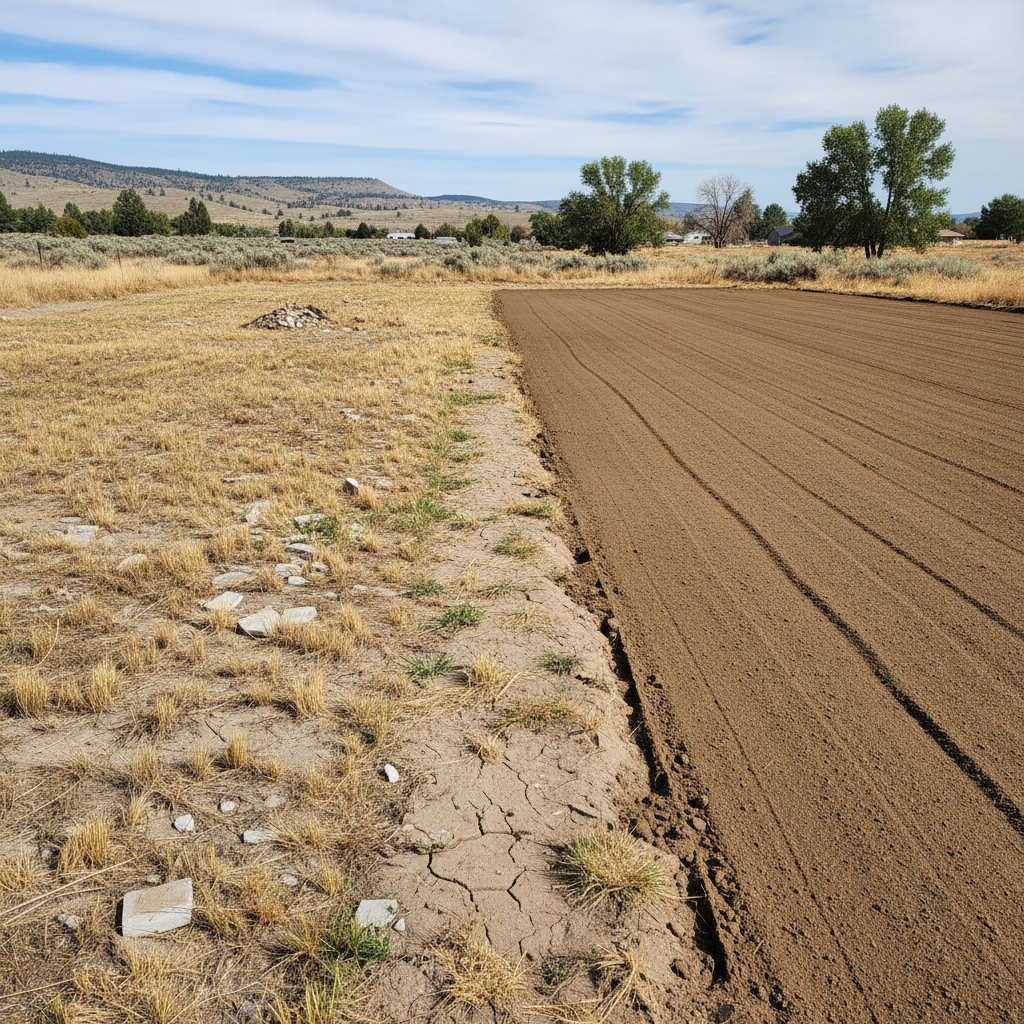
Got a piece of land in Moses Lake that needs clearing? Maybe you're finally building that dream shop, putting in a new garden, or just reclaiming some overgrown acreage. When it comes to getting rid of trees, brush, and stumps, you've generally got two main ways to go about it: forestry mulching or the more traditional dig-and-haul method. Both have their place, but they're pretty different, especially when you consider our specific climate and soil here.
Forestry Mulching: The "Grind It Up" Approach
So, what's forestry mulching? Imagine a giant, specialized machine that drives over your land, and a big rotating drum with teeth grinds up everything in its path – trees, brush, stumps, you name it – into a fine layer of wood chips. It's pretty efficient, and it leaves a nice, even surface of mulch behind.
Pros of Forestry Mulching:
- Speed: These machines are fast. They can clear a lot of ground in a short amount of time, which can save you money on labor.
- No Hauling: This is a big one. Everything gets processed right there on site. No massive piles of brush to burn (which isn't always allowed or safe, especially with our dry summers) and no trucks needed to haul away debris. That means fewer trips to the dump and less fuel burned.
- Soil Health: The mulch layer left behind isn't just for looks. It helps prevent erosion, retains moisture in the soil, and eventually breaks down, adding organic matter. This can be a real benefit in our sandy-loam soils around Moses Lake, which can sometimes struggle with water retention.
- Less Disturbance: The mulcher typically has a lower ground pressure than a big excavator, so it's less likely to compact your soil or leave deep ruts, which is good if you're trying to preserve the existing grade.
- Appearance: It leaves a clean, finished look, like a park or trail.
Cons of Forestry Mulching:
- Stumps Stay: While it grinds stumps down to ground level or just below, the root ball is still there. If you're building a foundation or need to dig deep for utilities, those buried roots can still be an issue.
- Cost for Deep Clearing: If you need to remove *all* organic matter for a building pad, mulching alone won't cut it. You'd still need an excavator to dig out those root balls.
- Limited Debris Size: While powerful, there are limits to the size of trees a mulcher can handle efficiently. Really massive trees might still need to be felled and processed differently first.
Traditional Excavation: The "Dig It Out" Method
This is what most people picture when they think about land clearing. You bring in an excavator, maybe a dozer, and they physically dig out trees, pull up stumps, and push material around. Then, you typically load all that debris into dump trucks and haul it away, or you pile it up for burning (if permits allow).
Pros of Traditional Excavation:
- Complete Removal: When you dig out a stump, you get the whole thing – root ball and all. This is crucial if you're pouring concrete, installing a septic system, or doing any deep digging. There's nothing left to decompose and create voids later.
- Site Grading: An excavator and dozer can do more than just clear; they can also rough grade your site, cut in driveways, or prepare a level building pad all in one go.
- Handles Anything: No tree is too big, no stump too stubborn. If it's there, an excavator can move it.
- Known Process: It's a tried-and-true method that's been around forever.
Cons of Traditional Excavation:
- More Site Disturbance: Big machines mean more compaction and potential for ruts, especially if the ground is wet.
- Debris Management: You're left with a lot of debris. You'll either pay to have it hauled away (which can get expensive fast) or spend time and money burning it (if allowed and safe). This is a big consideration in areas like the Columbia Basin where fire restrictions are common.
- Higher Cost (Sometimes): While the hourly rate for an excavator might be comparable, the added cost of hauling and disposal can quickly make traditional clearing more expensive for large areas of brush.
- Appearance: It can leave the site looking a bit rougher, with exposed soil and disturbed areas, requiring more finish work.
Which One Should You Choose for Your Moses Lake Project?
Honestly, it depends entirely on what you're trying to achieve.
If you're clearing a large area for pasture, a new trail system, or just want to clean up an overgrown section of your property without needing to dig deep, forestry mulching is often the way to go. It's faster, often more cost-effective because there's no hauling, and leaves a beneficial mulch layer. For example, if you're clearing out a bunch of Russian olive or tamarisk along a ditch bank near the Stratford area, mulching is fantastic.
However, if you're preparing a site for a new home, a shop with a concrete slab, or putting in a new well or septic system, you absolutely need those root balls out. In that case, traditional excavation with an excavator is non-negotiable. You don't want a tree stump decomposing under your foundation years down the road. We see it happen. For these projects, Classic Excavating Solutions will always recommend digging everything out properly from the start.
Sometimes, the best solution is a combination of both. We might use a mulcher to clear the lighter brush and smaller trees, then bring in the excavator to pull out the bigger stumps and do the final grading. It's all about matching the right tool to the job.
Give us a call or shoot us a message. We can walk your property, talk through your goals, and help you figure out the most efficient and effective way to get your land cleared right here in Moses Lake.